Geekbench 7: The Latest Evolution in Cross-Platform CPU and GPU Benchmarking
Geekbench 7 has officially launched, marking a significant update to the renowned cross-platform benchmarking tool. Available for Android, iOS, Linux, macOS, and Windows, Geekbench 7 introduces a suite of new and improved benchmarks designed to provide a more comprehensive and realistic assessment of CPU and GPU performance across a wide range of devices.
Expanded Benchmark Suite for Real-World Workloads
Continuing its commitment to modernizing performance measurement, Geekbench 7 adds several new benchmarks that reflect the evolving demands of today’s computing tasks. Among the highlights is a new game physics benchmark powered by the Jolt physics engine, which is utilized in popular titles such as Death Stranding 2: On the Beach, Horizon Forbidden West, and War Thunder’s Dagor Engine. This test evaluates rigid body physics and collision handling in 3D environments, offering insights into how devices manage complex gaming scenarios.
Media processing receives a significant upgrade as well. Geekbench 7 introduces new video encoding tests using the AV1 codec and AOM library, as well as audio encoding benchmarks leveraging the Opus codec for both music and speech. The video decode test now incorporates the AV1 video codec, Opus audio codec, and the Whisper speech recognition model, enabling comprehensive evaluation of video and audio decoding, audio resampling, and speech recognition capabilities.
For users interested in image editing performance, the new Photo Editor benchmark simulates real-world editing workflows by applying a series of crops, color adjustments, and retouching operations to multiple photos. These tasks mirror features found in leading image editing applications like Adobe Photoshop and Apple Photos, including color and tone corrections, stylistic filters, geometric adjustments, and composite edits.
Updated Performance Baseline and Scoring
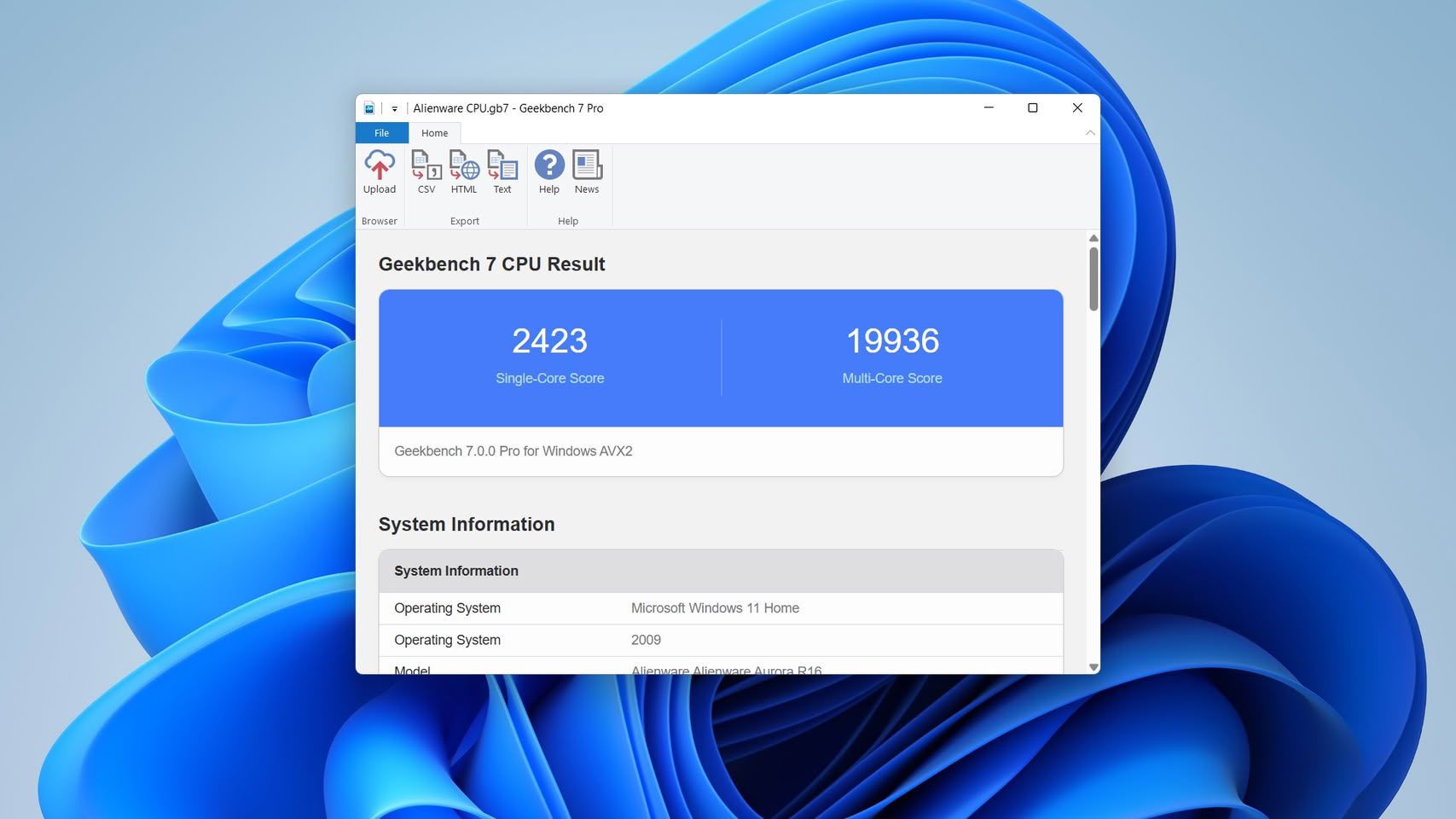
With Geekbench 7, the AMD Ryzen 7 7700 becomes the new baseline for CPU performance, scoring 2500 points in the updated CPU benchmark. This shift moves away from the previous Intel Core i7-12700 baseline and reflects changes in how performance is measured. It’s important to note that scores from Geekbench 7 are not directly comparable to those from earlier versions, as the new workloads and scoring system may result in different relative rankings among CPUs.
Smarter Multi-Core Benchmarking
Geekbench 7 introduces a redesigned multi-core benchmark that more accurately reflects real-world application behavior. Unlike previous versions, only workloads that are genuinely multi-threaded in practical use will run in multi-threaded mode. For example, the HTML5 Browser test remains single-threaded, aligning with how most web browsers operate. This approach ensures that multi-core scores provide a more meaningful and relevant measure of device performance for everyday tasks.
Enhanced GPU Benchmarking for Modern Applications
The GPU benchmark in Geekbench 7 now emphasizes machine learning and content creation workloads, which are increasingly important in today’s computing landscape. New tests include face tracking and real-time filter effects for video, image upscaling using machine learning, and background blurring for video conferencing streams. Additional GPU workloads cover RAW image processing, LUT-based video color grading, path tracing, and fluid simulation.
Geekbench 7 also expands API support, with CUDA joining OpenCL, Vulkan, and Metal. This allows users to benchmark NVIDIA GPUs using the same API that powers many of their most demanding applications.
Larger and More Diverse Data Sets
Reflecting the increasing complexity of modern workloads, Geekbench 7 updates its data sets to better match the files and tasks users encounter today. The File Compression benchmark now includes a wider variety of archives, spanning source code, object code, and text documents. The PDF Viewer workload features a broader range of documents, from park maps to technical papers. Developer and image processing benchmarks also benefit from more assets and support for modern image formats such as JPEG XL and DNG.
With these enhancements, Geekbench 7 delivers a more accurate, relevant, and comprehensive benchmarking experience, helping users and professionals alike assess the true performance of their devices in real-world scenarios.